All of the tasks we describe on this page are ones that we have learned to do by watching skilled people do them and by trial and error. We encourage anyone who wants to have a go to join in. We mainly use hand tools and are keen to help young people to learn how to use tools safely and skilfully. Keeping our tools in good order is another important skill we have learned, are still learning and like to share.
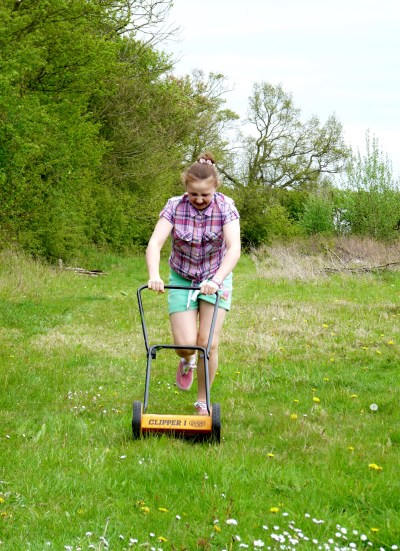
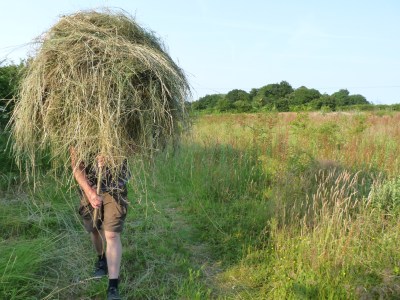
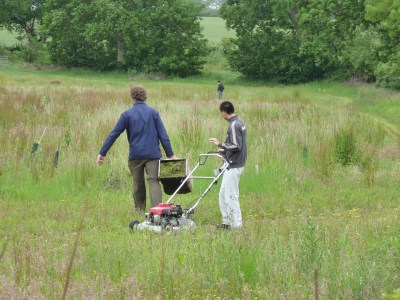
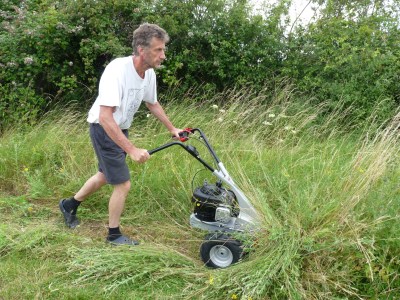
Mowing – our aim is to mimic traditional farming methods which had a rich tapestry of mixed arable and livestock fields, with hedgerows, orchards, coppice and woodland all of which provided a wide variety of habitats for wildlife. Clearly with only 4 acres of land we cannot include everything. We mow as a replacement for the nibbling livestock would do, and do maintenance to prevent nature turning the whole field into one big thicket which it would do without intervention (as is happening in the neighbouring field). This is commonly referred to as ‘Re-Wilding’ these days (see Wild East). One of the primary habitats we want to provide by mowing is hunting ground for barn owls. They hunt voles who live in grass which has developed a bit of ‘thatch’ ie not close cut to the ground. We mow the meadow in three main areas – the ‘top meadow’ and ‘orchard glade’ annually in August, and the ‘bottom meadow’ has sections all of which are cut two years in three in turn in September. This is much later than the traditional hay cutting done in May/June, but is deliberate because we want to do it after the seeds have ripened so they can be spread. Paths are mown as needed. Generally we rake off the cut grass into stacks in order to prevent fertility building up. The stacks themselves provide useful winter shelter for creatures. Anyone can have a go at mowing !
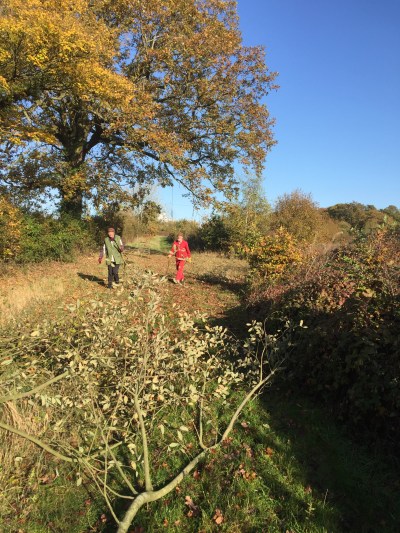
Hedge maintenance – the lovely, well-established hedges creating the boundary to Tiggins Meadow are a valuable habitat. All four sides of the field have quite different hedge forms and we maintain them to keep them that way. We have done quite a lot of work to encourage them to thicken up partly to improve the shelter they provide, but also to help keep big deer out of the field and encourage good blackberry crops. We have no particular timetable for trimming – keeping bramble runners from running is done whenever we spot them. If we do any major work, such as laying or a large ‘haircut’ then we do it in the autumn.
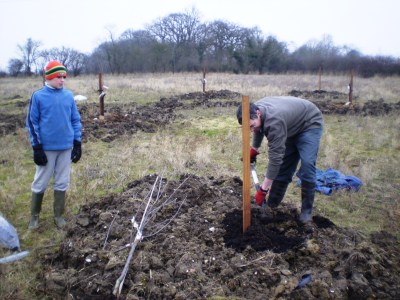
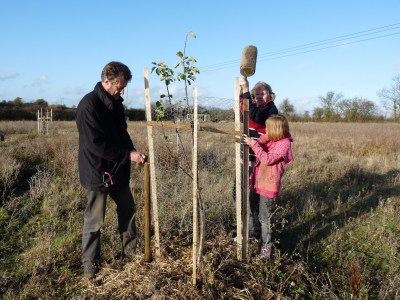
Tree planting and maintenance – when we first purchased the field in 2008 it was bare of trees except for those growing in the hedges. That first winter we planted about 30 mixed variety fruit trees in ‘the orchard’ and 8 varieties of willow; some for early pollen for bees, some for weaving with, and some to cut for fuel. Subsequently we planted an area with a variety of hazels. Other trees at Tiggins Meadow have arrived on their own, but we do decide where to allow a self-seeded tree to remain and where to remove them. We also provide a home for tree saplings donated by friends and family which includes some non-natives. Planting trees in the heavy clay soil is challenging – in the winter it’s too wet, in the summer too hard. We tend to plant in early spring so the young roots do not have a water-logged winter. We also planted the fruit trees up on humps and dug drainage ditches around the orchard for the same reason. The secondary benefit of doing this is the changes in level provide different habitats as can be seen in the summer with flowers in drifts down the Central Avenue ditch. We do very little pruning – just cutting out damaged branches if they look like they might cause the tree problems, but we do work every year to keep the base of the trees clear of brambles. We also sometimes apply a mulch to help preserve moisture during dry spells – this is usually done using up old straw bales that are being replaced. Newly planted trees are watered regularly during dry spells.
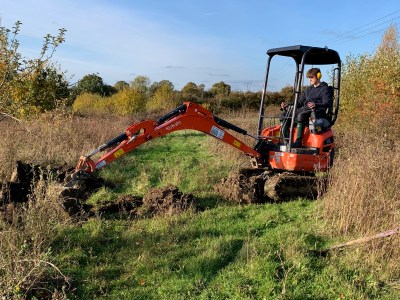
Ditch and pond digging – we did a lot of this in the first couple of years, putting in two ponds which dry out in the summer. In Nov 2019 we hired a mini-digger and dug out some more ditches and pond areas, one of which is in front of the barn. We intend to do some more work on that this winter and try to make it hold water year round using rainwater run-off from the barn roof. Both types of ponds provide different habitats and different opportunities for watching wildlife.
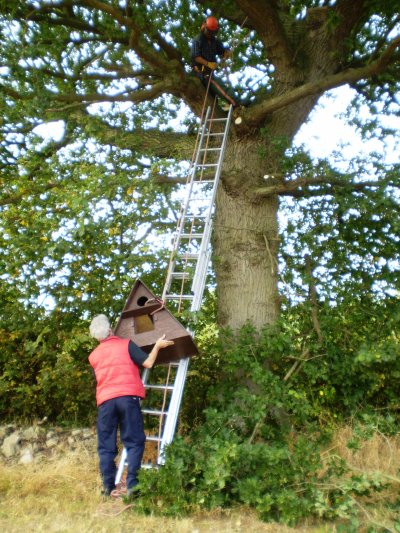
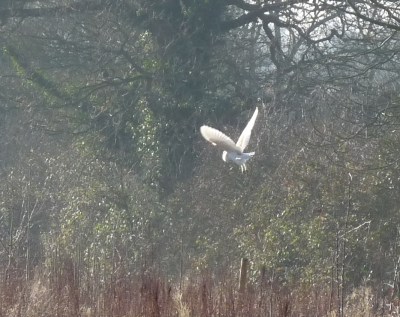
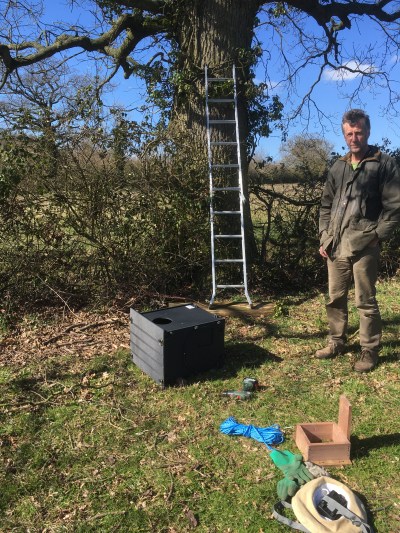
Nest boxes – through the Barn Owl Project Suffolk Wildlife were running we had our first nest box put up into one of the big old oak trees in late 2009. We did this because we knew barn owls were being seen locally and we wanted to help the population to thrive. The box is monitored annually by a trained volunteer from the British Trust for Ornithology and over the years they’ve ringed 13 chicks. We learned that young adult barn owls like to stay within the locality so in 2019 we put up another box in a nearby oak tree. It is a delight to watch barn owls hunting silently over the field – at dusk is the best time to spot them, particularly in winter when finding food is hard and in mid-summer when feeding chicks is demanding.
 WILD ABOUT TIGGINS